




Flower Care Tips Singapore: Maximize Bloom Longevity in Tropical Climate with Expert Techniques 2026

In Singapore's challenging tropical environment where constant heat (27-31°C) and high humidity (80%+) accelerate flower aging, proper flower care transforms fleeting beauty into lasting enjoyment—extending vase life from disappointing 3-4 days to impressive 7-14 days depending on variety. Whether you've received birthday bouquets, invested in premium arrangements for special occasions, or maintain regular flower purchases, understanding climate-adapted care techniques ensures maximum return on floral investments. From immediate conditioning upon arrival to daily maintenance routines and variety-specific strategies, mastering Singapore flower care means your blooms remain vibrant significantly longer than friends' wilting disappointments.
At FloraMoments.sg, we include detailed care instructions with every flower delivery Singapore, but comprehensive understanding of WHY specific techniques work empowers you to adapt strategies to your unique home environment—HDB flat versus condo, air-conditioned versus ambient spaces, northern versus western exposure. Let's explore science-backed flower care optimized for Singapore's tropical conditions, ensuring every arrangement delivers maximum beauty and value.
Essential Flower Care Fundamentals for Singapore Climate
| Care Technique | Why It Matters | Singapore-Specific Application | Impact on Longevity | Frequency Required |
|---|---|---|---|---|
| Immediate Hydration | Flowers lose water during delivery; immediate rehydration prevents permanent wilting | Singapore heat accelerates dehydration—unwrap and hydrate within 30 min of arrival | +30-40% lifespan | Once upon arrival |
| Stem Re-cutting | Cut stem ends seal quickly blocking water uptake; fresh cuts restore absorption | Tropical heat seals stems faster—re-cut at 45° angle removing 1-2cm immediately | +25-35% lifespan | Initial + every 2-3 days |
| Cool Water Use | Cool water slows bacterial growth and flower metabolism | Room temp water (22-24°C) in AC homes ideal; avoid hot tap water in Singapore heat | +20-30% lifespan | Every water change |
| Leaf Stripping | Submerged leaves decay rapidly, fouling water and shortening flower life | Singapore's warmth accelerates decay—remove ALL foliage below waterline immediately | +30-40% lifespan | Once initially |
| Flower Food | Provides sugars (energy) and biocides (bacteria prevention) | Critical in Singapore heat where bacteria multiply rapidly—use packet per instructions | +40-60% lifespan | Every complete water change |
| Daily Water Changes | Prevents bacterial buildup blocking stem water uptake | Singapore humidity breeds bacteria faster—change water daily vs. every 2-3 days in temperate climates | +30-50% lifespan | Daily in heat, every 2 days in AC |
| Cool Placement | Heat accelerates metabolism and wilting | Position in coolest rooms (bedrooms with 24/7 AC) away from western afternoon sun | +40-60% lifespan | Continuous consideration |
| Vase Cleaning | Bacterial biofilm on vase walls contaminates fresh water | Wash vases thoroughly with soap during water changes—bacteria thrive in warm humid conditions | +20-30% lifespan | Every water change |
Step-by-Step Initial Flower Conditioning Process
First hour after receiving flowers critically impacts ultimate longevity—follow this Singapore-adapted protocol:
- Unwrap Immediately (Within 30 Minutes): Don't leave flowers in delivery packaging—Singapore heat trapped in wrapping creates greenhouse effect accelerating wilting. Remove all plastic, paper, ribbons immediately upon arrival.
- Prepare Clean Vases: While flowers remain wrapped in original stems, wash vases with hot soapy water, rinse thoroughly. Fill with room-temperature water (22-24°C ideal in air-conditioned homes). Add flower food packet following package directions exactly—proper dilution matters.
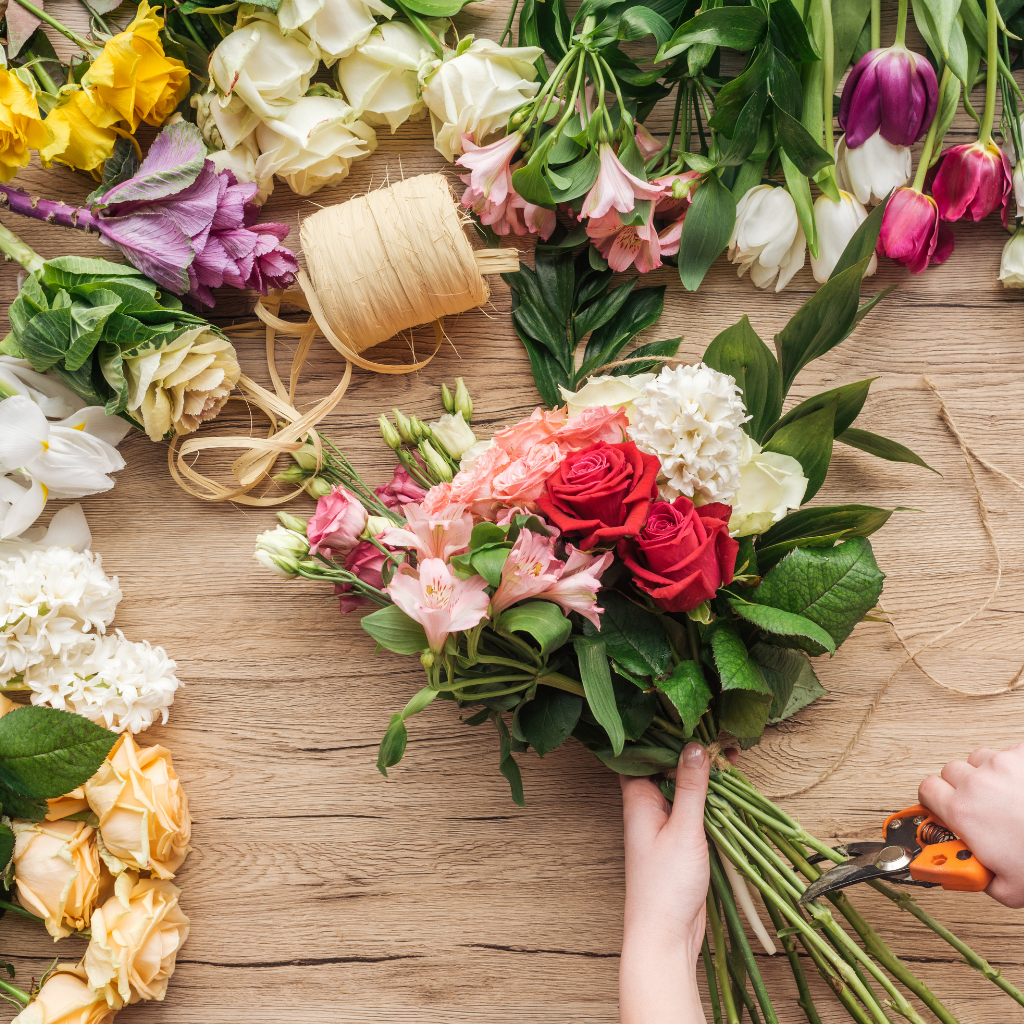
- Re-cut Stems Under Running Water: Using sharp, clean scissors or knife, cut stems at 45-degree angles while holding under running tap water. Remove 2-3cm (more than typical 1cm) compensating for Singapore delivery heat exposure. Angled cuts maximize surface area for water absorption; cutting underwater prevents air bubbles entering stems blocking uptake.
- Strip Lower Leaves: Remove ALL leaves that would sit below waterline—be ruthless. Even small leaves left submerged decay within 24 hours in Singapore warmth, fouling water. Strip up to 50% of foliage if necessary.
- Remove Damaged Petals: Gently pull off any bruised, brown, or damaged outer petals—they won't recover and drain energy from healthy blooms. This "grooming" focuses plant resources on viable flowers.
- Variety-Specific Treatments: For roses—remove guard petals (outer 2-3 damaged-looking petals protecting inner beauty). For lilies—remove pollen anthers preventing stains and reducing fragrance. For orchids—minimal intervention needed, just clean water.
- Immediate Placement in Prepared Water: Transfer stems directly from re-cutting into prepared vases—minimize air exposure time. Ensure stems sit in at least 10-15cm water depth (flowers are heavy drinkers).
- Strategic Positioning: Place arrangements in coolest available location away from: direct sunlight (especially afternoon western exposure), air-conditioning vents (causes dehydration despite cool air), heat sources (cooking areas, electronics), and high-traffic areas where accidental bumping occurs.
- 2-4 Hour Settling: Allow flowers 2-4 hours drinking water before expecting them to "perk up"—they've experienced delivery stress and need recovery time. Some wilting immediately after arrival is normal; they'll revive within few hours if properly conditioned.
Daily Flower Maintenance Routine for Singapore Homes

Consistent daily attention dramatically extends flower life in tropical conditions:
- Morning Quick Check (2 minutes): Visually inspect arrangements—any brown/wilted petals that need removal? Water level adequate (flowers drink heavily overnight in air-conditioning)? Any fallen petals/leaves in water needing removal? This 2-minute morning habit prevents small issues becoming arrangement-ending problems.
- Water Level Monitoring: Singapore's air-conditioning evaporates vase water faster than most realize. Top up water daily ensuring stems remain submerged 10-15cm minimum. Use room-temperature water from fridge-stored bottles (cool but not shocking cold) rather than hot tap water.
- Petal Grooming: Remove any spent blooms or wilted petals immediately—don't wait for "convenient time." Wilting flowers release ethylene gas accelerating neighbor bloom aging. This 30-second daily grooming maintains arrangement aesthetics and extends overall life.
- Rotation for Even Light: If arrangements sit near windows, rotate vases 90° daily ensuring all sides receive equal light exposure. This prevents one-sided growth and bending toward light sources—keeping arrangements symmetrically beautiful.
- Every 2-3 Days Deep Maintenance: Complete water change (daily in ambient heat, every 2-3 days in consistent air-conditioning), thorough vase washing with soap, stem re-cutting (remove bottom 1cm at 45° angle), fresh flower food addition, and repositioning if original location proves too warm/bright.
Flower Type-Specific Care Strategies
Different flowers require tailored approaches in Singapore conditions:
- Roses (7-10 days typical): Remove guard petals initially, re-cut stems every 2 days, change water every 2-3 days in AC spaces (daily in warm rooms), keep away from fruits (ethylene gas producers), and mist petals lightly if air-conditioning creates very dry conditions. Premium Ecuador roses last longer than standard varieties due to robust cultivation.
- Lilies (8-12 days typical): Remove pollen anthers immediately when buds open (prevents staining and reduces fragrance), change water every 2-3 days, remove individual spent blooms as they fade (stems have multiple buds opening sequentially), and position away from direct AC vents (petals are delicate). Accept that lily fragrance intensifies in enclosed Singapore spaces—remove anthers if overwhelming.
- Orchids Cut Stems (10-14 days): Minimal intervention needed—orchids are remarkably hardy in tropical Singapore. Change water every 3-4 days, avoid re-cutting stems (can introduce infections), keep in moderate indirect light, and mist occasionally if air-conditioning creates excessive dryness. Phalaenopsis stems particularly long-lasting.
- Sunflowers (7-10 days): Change water daily (sunflowers are heavy drinkers and water clouds quickly), re-cut stems every 2-3 days, remove leaves aggressively (foliage decays rapidly), support heavy heads if stems bend (use floral tape or stakes), and expect some petal drop—normal for sunflower varieties.
- Tulips (5-7 days in Singapore): Use cold water (add ice cubes)—tulips prefer cool conditions opposite Singapore heat, shallow water (3-4 inches)—tulips don't need deep vases, re-cut stems every 2 days, accept natural bending toward light (it's characteristic tulip behavior not poor care), and consider night refrigeration for special events (extends freshness 1-2 days but requires fridge space).
- Gerberas (7-10 days): Support stems (they're hollow and bend easily), change water every 2 days, avoid getting water on flower heads (causes rot), keep away from fruits, and trim stems carefully (hollow interiors make them delicate). Some petal drop is normal—gerberas shed as they age.
- Carnations (14-21 days): Most long-lasting common flower—minimal care needed. Change water every 3-4 days, avoid ethylene exposure (fruits, cigarette smoke), and remove spent blooms as they fade. Carnations remarkably tolerant of Singapore conditions making them excellent value.
- Hydrangeas (5-8 days): Heavy water drinkers—check levels twice daily, completely submerge wilted heads in cool water 30 minutes (revives them), change water daily, and consider smaller arrangements in Singapore versus massive hydrangea displays possible in temperate climates (longevity challenges in heat).
Common Singapore Flower Care Mistakes to Avoid
- Delaying Initial Conditioning: Leaving flowers in delivery wrapping "until later" while running errands—Singapore heat trapped in packaging wilts flowers beyond recovery. Unwrap and hydrate IMMEDIATELY upon arrival even if busy—10 minutes now saves arrangements.
- Using Hot Tap Water: Singapore's water heaters produce very hot tap water (60+°C). Using hot water literally cooks stem tissue, destroying water uptake capacity. Always use room-temperature or cool water—never hot from tap.
- Ignoring Flower Food: Thinking flower food is "optional marketing gimmick"—it's scientifically formulated providing sugars (energy) and biocides (bacteria prevention). Flowers in plain water last 40-60% shorter than those with proper flower food in Singapore conditions.
- Infrequent Water Changes: Assuming weekly water changes suffice—Singapore's warmth breeds bacteria rapidly. Cloudy water signals bacterial bloom blocking stem uptake. Daily changes in ambient heat, every 2-3 days in air-conditioning minimum.
- Leaving Submerged Foliage: "A few small leaves won't matter"—they absolutely do. Even tiny leaves decay within 24-48 hours in Singapore warmth, creating bacterial soup killing arrangements. Strip ruthlessly.
- Western/Northern Window Placement: Western windows receive intense afternoon sun (hottest part of Singapore day)—flowers wilt rapidly. Northern exposure or interior rooms away from direct sun work best.
- Fruit Proximity: Placing flower arrangements near fruit bowls—ripening fruits release ethylene gas accelerating flower aging. Keep arrangements and fruits in separate rooms if possible.
- Overcrowding Vases: Cramming too many stems in small vases restricts water access and increases bacterial growth. Use appropriately sized vases—roughly 1 inch vase diameter per 3-5 stems depending on thickness.
- Neglecting Vase Hygiene: Reusing vases without proper washing—bacterial biofilm on walls invisibly contaminates fresh water even if vase "looks clean." Wash with hot soapy water, scrub thoroughly, rinse completely every time.
- Assuming All Flowers Need Same Care: Treating tulips like roses, orchids like gerberas—each variety has specific needs. Research care requirements for specific flowers in your arrangements rather than generic approach.
Reviving Wilted Flowers: Singapore Emergency Techniques

If flowers wilt prematurely despite care, these rescue techniques often succeed:
- Complete Stem Re-cutting: Remove bottom 3-5cm (more aggressive than routine maintenance), cut at steep 45° angle, cut under running water preventing air bubbles, and immediately place in fresh cool water with flower food. This "reset" often revives moderately wilted arrangements.
- Warm Water Shock: Controversial but effective—place wilted stems in warm (not hot) water (35-40°C) for 30-60 minutes. Warmth increases water uptake temporarily; after revival, transfer to room-temperature water. Don't use for delicate flowers like tulips—better for hardy varieties like roses.
- Complete Submersion (Hydrangeas): For badly wilted hydrangeas, submerge entire flower heads and stems in cool water (bathtub, large bucket) for 1-2 hours. Their large surface area allows water absorption through petals, often reviving seemingly dead blooms.
- Paper Wrapping Method (Roses): Wrap wilted roses tightly in newspaper creating straight columnar shape, cut stems, stand wrapped bouquet in deep cool water 2-4 hours. Paper straightens bent stems while they rehydrate—often restores structure.
- Refrigeration Revival: If you have refrigerator space, place entire arrangement (vase and all) in fridge (2-4°C) overnight. Cool temperatures reduce metabolic demands while flowers rehydrate. Remove in morning—often revived. Works especially well for roses and tulips.
- Strategic Grooming: If revival fails for entire arrangement, remove hopelessly wilted stems, rearrange survivors in smaller vase with fresh water, and enjoy remaining blooms rather than discarding everything. Partial arrangements still provide beauty.
Prevention Better Than Cure:
These rescue techniques work sometimes but not always—prevention through proper daily care ensures you rarely need emergency measures. Consistent small efforts beat sporadic rescue attempts.
Seasonal Considerations for Singapore Flower Care
While Singapore lacks temperate seasons, weather patterns affect flower care:
- Northeast Monsoon (November-March): Cooler temperatures (25-28°C) and rain reduce air-conditioning needs—many homes use less AC during this period. ADJUST: Increase water change frequency (less AC = warmer indoor temps), monitor for increased humidity causing mold in vases, and expect slightly shorter flower life in ambient warmth versus continuous AC.
- Southwest Monsoon (June-September): Hotter, drier conditions (28-31°C) with less rain increase AC usage. ADJUST: Check water levels more frequently (AC evaporates water faster), mist flowers lightly if AC creates very dry air, and expect better flower longevity with consistent cool temperatures.
- Inter-Monsoon Periods (April-May, October-November): Hottest, most humid periods with frequent thunderstorms. ADJUST: Daily water changes essential (heat + humidity = bacterial paradise), position away from humid areas (bathrooms, kitchens where additional moisture exacerbates issues), and consider reducing flower purchases during these challenging months unless willing to provide intensive care.
- Haze Periods (Occasional): Regional forest fires create haze reducing air quality. ADJUST: Keep flowers away from open windows (pollutants settle on petals), increase air-conditioning use (better than outdoor air), and rinse petals gently if significant dust accumulation visible.
Maximizing Value: Cost Per Day Analysis
Proper care transforms flower economics from disappointing to justified:
- Scenario A—Poor Care: $80 bouquet lasting 4 days = $20/day beauty cost. Frustrating value—expensive arrangement gone before appreciation.
- Scenario B—Good Care: $80 bouquet lasting 8 days = $10/day beauty cost. Reasonable value—proper care doubles enjoyment per dollar.
- Scenario C—Excellent Care: $80 bouquet lasting 12 days = $6.67/day beauty cost. Excellent value—meticulous care triples longevity, making premium arrangements economically justifiable.
This analysis reveals why learning proper Singapore flower care matters—it's not just beauty extension but economic optimization of floral investments.
Sustainable Flower Care Practices
Environmentally conscious Singapore residents can adopt eco-friendly care habits:
- Water Reuse: Used flower water (without chemical preservatives) can water garden plants—nutrients from decaying organic matter benefit soil. Don't pour down drains wastefully.
- Composting Spent Flowers: Rather than trashing wilted arrangements, compost stems, leaves, petals. Some Singapore condos offer organic waste composting—utilize these systems. HDB residents can participate in community composting programs.
- Reusable Containers: Invest in quality vases reused indefinitely rather than disposable containers. This reduces waste while building attractive vase collection. Choose versatile sizes (medium 6-8 inch height works for most arrangements).
- Natural Flower Food Alternatives: While commercial flower food is most effective, DIY alternatives work reasonably: 1 teaspoon sugar + few drops bleach per liter water. Sugar provides energy; bleach prevents bacteria. Not as effective as commercial formulations but better than plain water.
- Minimal Chemical Use: Avoid excessive chemical additives (aspirin, vodka, pennies—popular myths with minimal evidence). Proper basic care (clean water, re-cutting, cool placement) beats chemical shortcuts.
- Local/Regional Flowers: When possible, choose flowers from Southeast Asian farms (Thailand, Malaysia, Indonesia) over intercontinental imports—reduced carbon footprint from shorter shipping. Regional tropicals also better suited to Singapore conditions.
Teaching Children Flower Care: Family Activity
Involving children in flower maintenance creates learning opportunities:
- Responsibility Development: Assign age-appropriate tasks—preschoolers monitor water levels, primary students remove wilted petals, secondary students handle complete care. Regular flower maintenance teaches consistent responsibility.
- Science Education: Explain WHY techniques work—stem water uptake (capillary action), bacterial growth acceleration in warmth, plant metabolism and respiration. Flower care becomes applied biology lesson.
- Aesthetic Appreciation: Discussing flower beauty, colors, shapes develops aesthetic sensibilities. "Which flower do you think is prettiest? Why?" cultivates observation and opinion articulation.
- Life Cycle Understanding: Watching flowers bloom, peak, fade, wilt teaches natural cycles of growth and decay—valuable life lessons through gentle, beautiful context.
- Cultural Connection: Explaining flower symbolism across Singapore's cultures (Chinese New Year prosperity flowers, Hari Raya celebrations, Deepavali marigolds) connects children to multicultural heritage.
Conclusion: Mastering Flower Longevity in Singapore's Challenging Climate
While Singapore's tropical heat and humidity challenge even experienced flower enthusiasts, understanding climate-adapted flower care techniques transforms fleeting disappointments into lasting beauty—extending vase life from days to weeks through simple, consistent attention. From immediate conditioning upon delivery to daily maintenance routines and variety-specific strategies, these science-backed approaches ensure your flower arrangements deliver maximum value and enjoyment.
Whether maintaining birthday bouquets, caring for luxury arrangements, or optimizing everyday purchases, FloraMoments.sg supports your flower care journey with detailed instructions, climate-appropriate flower selection, and expert guidance. Our understanding of Singapore's unique challenges ensures the flowers we deliver are not only beautiful upon arrival but equipped for maximum longevity in your care. Start applying these techniques today and discover how proper care transforms flower ownership from expensive fleeting indulgence into economically justified, environmentally conscious, consistently beautiful home enhancement.
Frequently Asked Questions (FAQ)
Q1: How long should flowers last in Singapore's climate?
A: Expected longevity varies significantly by variety and care quality in Singapore conditions: HARDY VARIETIES: Carnations (14-21 days), orchids (10-14 days), anthuriums (14-21 days), alstroemeria (10-14 days)—these tropical-adapted or naturally robust flowers handle Singapore heat well. MODERATE LONGEVITY: Roses (7-10 days), lilies (8-12 days), gerberas (7-10 days), sunflowers (7-10 days)—standard expectation with proper care in air-conditioned spaces. SHORT-LIVED: Tulips (5-7 days), hydrangeas (5-8 days), peonies (5-7 days), ranunculus (5-7 days)—temperate flowers struggling with tropical conditions despite best care. CARE IMPACT: Proper care (daily water changes, cool placement, flower food) extends life 40-60% versus neglect. $80 bouquet lasting 4 days with poor care versus 8-10 days with good care dramatically shifts value proposition. REALISTIC EXPECTATIONS: Singapore's heat means flowers last 20-30% shorter than temperate climates—don't expect European longevity. However, proper technique still triples longevity versus common mistakes, making care knowledge economically worthwhile.
Q2: Do I really need to use flower food packets or can I just use plain water?
A: Flower food packets SIGNIFICANTLY extend life—they're scientifically formulated, not marketing gimmicks. SCIENCE: Commercial flower food contains three critical components: (1) Sugars (glucose/fructose) providing energy—cut flowers can't photosynthesize, requiring external nutrition, (2) Acidifiers (citric acid) lowering pH to 3.5-4.5 optimizing water uptake and slowing bacterial growth, and (3) Biocides (quaternary ammonium compounds or bleach) preventing bacterial multiplication that blocks stem water absorption. SINGAPORE IMPACT: Tropical warmth accelerates bacterial growth—biocides are CRITICAL. Studies show flowers in proper flower food last 40-60% longer than plain water in warm conditions. COST: Packets cost $0.30-$0.50 each—minimal investment for dramatic results. If $80 arrangement lasts 8 days with food versus 5 days without, you're paying $0.50 for 60% more beauty ($48 additional value). DIY ALTERNATIVE: 1 teaspoon sugar + 2-3 drops bleach per liter water provides basic nutrition and bacterial control—less effective than commercial formulations but better than plain water if packets unavailable. VERDICT: Always use flower food if provided—refusing it wastes money through shortened flower life. The small effort (dissolving packet in water) yields massive returns through extended longevity.
Q3: Should I put flowers in the refrigerator overnight to make them last longer?
A: Refrigeration CAN extend flower life but requires proper execution and isn't practical for most Singapore households. SCIENCE: Cool temperatures (2-4°C) slow flower metabolism and bacterial growth—florists refrigerate inventory for this reason. Overnight refrigeration reduces metabolic demands, extending overall lifespan 10-20%. PRACTICAL CHALLENGES: (1) Singapore refrigerators are typically full (smaller units than Western countries)—no space for vase arrangements, (2) Ethylene exposure—fruits/vegetables in fridge emit gas accelerating flower aging, (3) Moisture damage—condensation can harm petals, and (4) Daily hassle—moving arrangements in/out is tedious. WHEN WORTH IT: Special events requiring perfect flower condition specific days (weddings, important dinners)—overnight fridge storage before events ensures peak freshness. Premium arrangements ($150+) where maximum longevity justifies effort. Delicate varieties (tulips, peonies) benefiting most from cool storage. BETTER ALTERNATIVES: Position in coolest room (bedroom with 24/7 air-conditioning at 22-24°C), use cool water and daily changes, keep away from heat/sun. These easier strategies provide 80% of refrigeration benefits without logistical challenges. VERDICT: Refrigeration is optional advanced technique for enthusiasts—not necessary for good flower longevity with proper basic care.
Q4: Why do my flowers wilt so quickly even though I change the water?
A: Quick wilting despite water changes suggests one of several overlooked issues: STEM SEALING: Are you re-cutting stems when changing water? Stem ends seal within hours blocking water uptake—changing water without re-cutting doesn't help. Cut bottom 1cm at 45° angle EVERY water change. BACTERIAL BUILDUP: Are you thoroughly washing vases? Just dumping old water and refilling leaves bacterial biofilm on vase walls—recontaminating fresh water instantly. Scrub with hot soapy water every change. LEAF DECAY: Did you remove ALL submerged foliage? Even tiny leaves decay in Singapore warmth within 24-48 hours, creating bacterial soup. Strip ruthlessly—better too much than too little. PLACEMENT PROBLEMS: Is arrangement in hot location? Western windows with afternoon sun, near cooking areas, above electronics all create heat stress despite water changes. Move to cooler spots. NO FLOWER FOOD: Plain water lacks nutrition and bacterial control. Use provided flower food packets—they're not optional for good longevity. AIR CONDITIONING TIMING: If AC turns off at night, overnight warmth stresses flowers despite daytime cooling. 24/7 consistent AC much better than intermittent. VARIETY LIMITATIONS: Some flowers (tulips, hydrangeas) simply struggle in Singapore regardless of care—their 5-7 day lifespan is biological reality not care failure. DIAGNOSIS: Systematically address each factor—most wilting issues come from overlooked basics rather than advanced problems.
Q5: Can I revive flowers that have already started wilting?
A: Sometimes yes, depending on wilting severity and cause—try these Singapore-adapted rescue techniques: MILD WILTING (slight drooping, still structurally intact): (1) Aggressive stem re-cutting—remove 3-5cm at steep 45° angle under running water, (2) Fresh cool water with flower food in clean vase, (3) Cool placement away from all heat sources, (4) 2-4 hour recovery time. Success rate: 60-80% for mild wilting caught early. MODERATE WILTING (significant drooping, some petal curling): (1) Warm water shock—place stems in warm (35-40°C) water 30 minutes increasing uptake temporarily, (2) Transfer to room-temperature water after, (3) Refrigeration overnight if space available (2-4°C slows metabolism allowing recovery), (4) Remove worst affected blooms focusing remaining energy on salvageable flowers. Success rate: 30-50% partial recovery. SEVERE WILTING (limp, petal browning, structural collapse): (1) Hydrangea submersion—completely submerge entire flower heads in cool water 1-2 hours (works for hydrangeas specifically), (2) Strategic grooming—salvage healthy stems, discard dead ones, create smaller arrangement from survivors, (3) Accept losses—some wilting is irreversible cell death, not recoverable. Success rate: 10-20% salvage. PREVENTION: Catch wilting early through daily monitoring—mild wilting is highly reversible, severe rarely is. Regular maintenance prevents needing rescue attempts.
Q6: Is it better to display flowers in air-conditioned rooms or near windows with natural light?
A: AIR-CONDITIONED ROOMS WIN decisively in Singapore—prioritize temperature over natural light for cut flower longevity. REASONING: Cut flowers don't photosynthesize significantly (they're dying, not growing)—light requirements are minimal. Temperature control matters enormously—heat accelerates metabolism and wilting dramatically. SINGAPORE SPECIFIC: Western/southern windows receive intense afternoon sun (hottest part of day)—temperatures near windows can reach 32-35°C even in air-conditioned rooms. This heat stress overwhelms any photosynthesis benefits. OPTIMAL PLACEMENT: Cool interior rooms with 24/7 air-conditioning (22-24°C), moderate indirect light from northern windows if natural light desired, away from western afternoon sun exposure, and away from AC vents (prevent dehydration despite cool temps). LIGHT REQUIREMENTS: Most cut flowers thrive in moderate indirect light—they're not houseplants needing bright conditions. Dim bedrooms with consistent AC superior to bright hot living rooms. EXCEPTION: If home has NO air-conditioning (rare in Singapore), position near northern windows for coolest available location with good ventilation. But realistically, cut flowers struggle in ambient Singapore heat (27-31°C) regardless of placement—AC significantly impacts longevity. VERDICT: Choose coolest location prioritizing temperature stability over light access—this maximizes vase life in tropical conditions.
Q7: Why do florists' flowers last longer than grocery store or market flowers?
A: Professional florists' superior longevity results from multiple handling and quality factors: FRESHNESS: Florists receive deliveries 2-3x weekly from farms—flowers are days fresher than grocery stores with weekly deliveries or markets with variable supply chains. Those 2-3 extra days of freshness translate directly into customer vase life. CONDITIONING: Professional florists properly condition flowers immediately upon arrival—re-cutting, hydrating with commercial preservatives, removing damaged stems, refrigerated storage at 2-4°C. Grocery stores often leave flowers in delivery boxes at room temperature hours before display. SELECTION: Florists cull inferior stems—only best quality reaches customers. Grocery stores/markets display everything to minimize waste, including marginal quality stems. EXPERTISE: Florists understand variety-specific care—roses get different treatment than lilies. Markets treat all flowers identically. STORAGE: Proper refrigeration, flower food in buckets, regular re-cutting—florist best practices versus grocery store neglect. PRICING REFLECTS QUALITY: Yes, florists cost 30-50% more than markets, but flowers last 40-60% longer—better value per day despite higher upfront cost. SINGAPORE CONTEXT: Tropical heat makes professional conditioning even more critical—market flowers exposed to ambient warmth deteriorate rapidly. ADVICE: For important occasions, buy from reputable florists. For casual enjoyment where shorter life acceptable, markets offer budget options. But understand price difference partly reflects longevity difference—factor vase life into value calculations.
Q8: Can I mix different flower types in the same vase or do they need separate containers?
A: You CAN mix most flowers successfully, but some combinations should be avoided: SAFE COMBINATIONS: Roses + lilies, gerberas + carnations, orchids + anthuriums, tulips + ranunculus—these common pairings have compatible care needs and don't harm each other. Most professional arrangements successfully mix varieties. AVOID MIXING: (1) DAFFODILS with anything—they release sap toxic to other flowers. Keep daffodils isolated until sap stops flowing (12-24 hours), then can mix. (2) TULIPS with most others—tulips prefer cool shallow water (3-4 inches) while most flowers want deep water (10-15cm). Compromise water depth or separate containers. (3) WOODY STEMS (hydrangeas, branches) with soft stems—woody stems don't benefit from re-cutting as frequently, creating maintenance incompatibility. COMPATIBILITY FACTORS: Water depth preferences (shallow vs. deep), temperature preferences (cool vs. room temp), flower food tolerance (some flowers sensitive to biocides), and care schedule (frequent vs. infrequent water changes). SINGAPORE STRATEGY: Focus on tropical-adapted varieties (orchids, anthuriums, tropical foliage) mixing easily—they share care requirements suited to Singapore conditions. Mixing temperate imports (tulips, peonies) with tropicals creates care conflicts. GENERAL RULE: Same-origin flowers (all tropicals or all temperate) typically mix successfully; cross-climate mixing creates challenges. If uncertain, separate arrangements allow variety-specific optimal care—though aesthetically less dramatic than mixed displays. Most ready-made arrangements from florists pre-combine compatible varieties—trust professional judgment on mixtures.


