




Eco-Friendly Sustainable Flowers Singapore: Green Floral Choices for Environmentally Conscious Consumers in 2026

As Singapore advances toward its Green Plan 2030 goals and consumers increasingly prioritize environmental responsibility, eco-friendly flowers and sustainable floristry practices have evolved from niche concerns to mainstream expectations. From choosing locally sourced tropical blooms over intercontinental imports to selecting florists using biodegradable packaging and supporting organic cultivation, environmentally conscious Singaporeans can now align floral purchases with sustainability values without sacrificing beauty or quality. Whether you're planning a zero-waste wedding, seeking sustainable corporate flower programs, or simply wanting to minimize your environmental footprint while enjoying beautiful blooms, understanding Singapore's sustainable flower landscape helps you make informed choices supporting both aesthetic desires and planetary health.
At FloraMoments.sg, our commitment to sustainable flower delivery Singapore balances environmental responsibility with the beauty customers expect—sourcing from ethical farms, minimizing packaging waste, and educating customers on extending flower longevity to reduce consumption. Our understanding of Singapore's unique sustainability challenges and opportunities ensures your floral choices can be both beautiful and environmentally conscious. Let's explore how to select and enjoy flowers while minimizing environmental impact in Singapore's context.
Environmental Impact of Traditional Floristry
| Environmental Issue | Traditional Floristry Impact | Singapore Context | Sustainable Alternatives | Impact Reduction |
|---|---|---|---|---|
| Carbon Footprint (Transportation) | Air freight from Ecuador (14,000km), Netherlands (10,000km) | Singapore imports 90%+ of flowers—massive air freight carbon | Regional sourcing (Thailand, Malaysia, Indonesia—under 2,000km) | 60-80% reduction |
| Pesticide Use | Conventional farms use heavy pesticides for blemish-free blooms | Pesticide residues affect florist health, water systems when disposed | Organic/low-spray certification, integrated pest management farms | 80-90% reduction |
| Water Consumption | Flower farming water-intensive (100L+ per kg flowers) | Limited direct Singapore impact but global water scarcity concern | Drought-tolerant varieties, efficient irrigation farms | 30-50% reduction |
| Packaging Waste | Plastic wrapping, foam, non-recyclable ribbons, disposable vases | Singapore landfill space limited—waste reduction critical | Biodegradable materials, reusable containers, minimal packaging | 70-90% reduction |
| Chemical Preservatives | Flower food contains biocides, synthetic chemicals | Chemical disposal into Singapore water system | Natural preservatives, proper disposal guidance | 50-70% reduction |
| Floral Foam | Non-biodegradable plastic foam for arrangements | Microplastics contaminate Singapore environment | Biodegradable alternatives, wire/tape mechanics | 100% elimination |
| Labor Practices | Some farms have poor worker conditions, low wages | Ethical consumption increasingly valued by Singaporeans | Fair trade certification, direct farm relationships | Varies by farm |
| Post-Consumer Waste | Wilted flowers to landfill, not composted | Organic waste could be composted but often isn't | Composting programs, green bin usage, potted alternatives | 80-100% reduction |
Sustainable Flower Sourcing for Singapore Consumers
The most impactful sustainability choice is where flowers originate:
- Regional Southeast Asian Flowers: Thailand, Malaysia, Indonesia produce tropical flowers naturally adapted to regional climates—minimal climate control needed reducing energy consumption. Transport distances under 2,000km versus 10,000-14,000km from Ecuador/Netherlands dramatically reduces carbon footprint (60-80% less emissions). AVAILABLE VARIETIES: Orchids, anthuriums, heliconia, ginger flowers, tropical foliage—these thrive naturally in Southeast Asian climates. PRICING: Often 20-30% cheaper than European imports due to lower transport costs—sustainability and economy align.
- Cameron Highlands (Malaysia): Just 350km from Singapore, this highland region (1,500m elevation) grows temperate flowers in cooler natural climate—roses, chrysanthemums, carnations. While smaller blooms than high-altitude Ecuador varieties, dramatically lower carbon footprint makes them sustainable choice. SUPPORT: Choosing Cameron Highlands flowers supports regional agriculture versus intercontinental imports.
- Singapore-Grown Limited Options: Local farms (Bollywood Veggies, Kranji Countryside) produce limited cut flowers—mainly tropical varieties and herbs. Scale insufficient for commercial floristry but available at farmers markets for DIY arrangements. FUTURE: Singapore Food Agency exploring vertical farming possibilities for flowers—if developed, could revolutionize local sustainable floristry.
- Seasonal Awareness: Some flowers require energy-intensive greenhouse cultivation off-season. Choosing naturally in-season varieties reduces environmental impact—peonies April-June natural season, tulips December-March. Off-season purchases force energy consumption maintaining unnatural growing conditions.
- Avoid Worst Offenders: Roses from Kenya (8,500km + water-stressed region), lilies from drought-prone areas, flowers requiring extensive cold chain throughout transport. When sustainability matters, research origin and growing conditions.
How to Identify Sustainable Sources:
- Ask florists about flower origins—quality services know their supply chains
- Look for certifications: Rainforest Alliance, Fair Trade, Organic
- Choose tropical varieties naturally suited to Southeast Asian cultivation
- Prefer potted plants over cut flowers—one purchase, months of beauty
- Support florists transparent about sustainability practices
Eco-Friendly Packaging and Presentation
Sustainable floristry extends beyond flowers to how they're packaged:
- Eliminate Floral Foam: Traditional oasis foam is non-biodegradable plastic contributing microplastic pollution. ALTERNATIVES: Chicken wire mechanics, floral tape grids, biodegradable foam (made from plant starches—available but rare in Singapore), or simple vase arrangements requiring no foam. REQUEST: Ask florists to avoid foam in your arrangements—most can accommodate with advance notice.
- Biodegradable Wrapping: Replace plastic film with paper, fabric wraps, or banana leaves (traditional Southeast Asian wrapping). SINGAPORE OPTIONS: Some premium florists use handmade paper, natural fiber materials, or reusable fabric furoshiki wrapping (Japanese tradition gaining popularity). These materials compost or can be reused versus plastic destined for landfills.
- Reusable Containers: Instead of disposable vases, arrangements in permanent containers recipient keeps become functional home items. PROGRAMS: Container exchange systems where florists collect old vases when delivering new arrangements—closed-loop reducing waste. CUSTOMER CHOICE: Specify reusable vase preference when ordering versus disposable packaging.
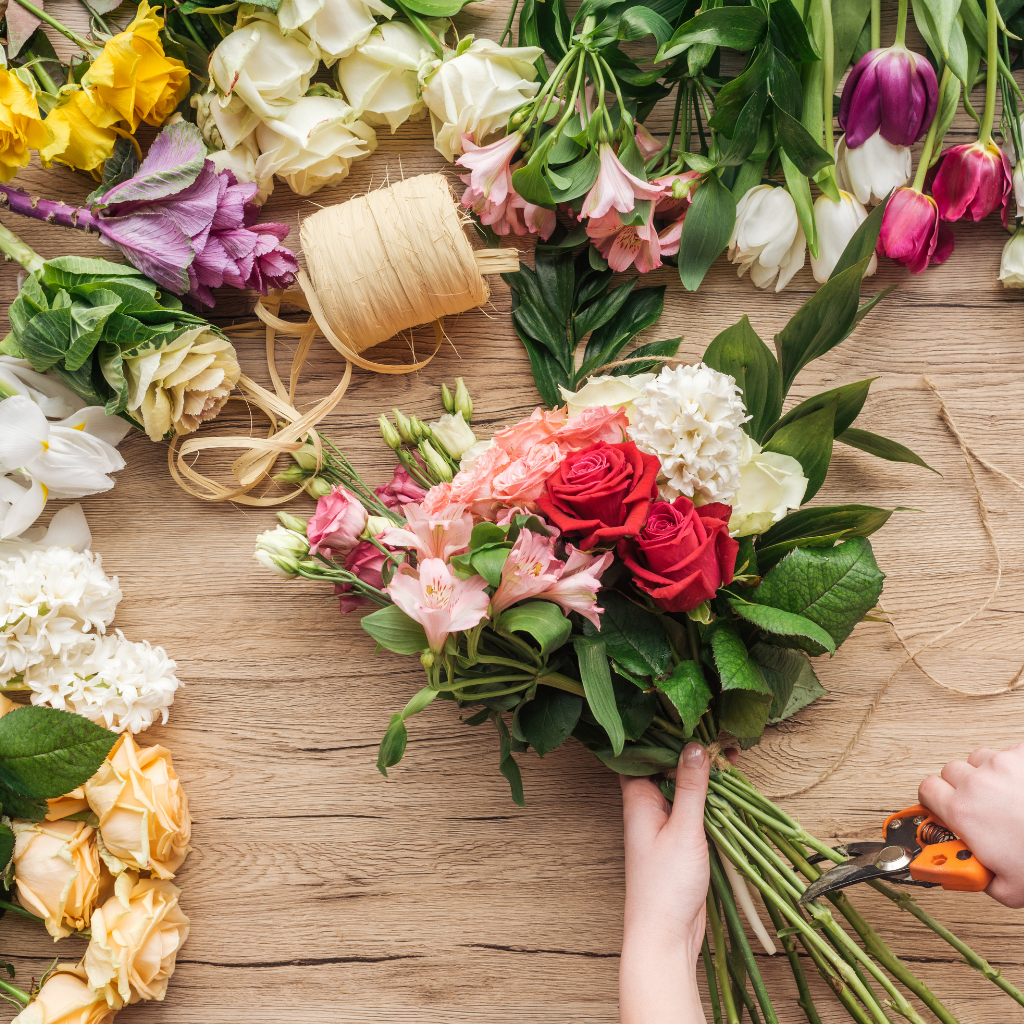
- Minimal Ribbon/Decoration: Synthetic ribbons, glitter, foam decorations are petroleum-based non-recyclables. ALTERNATIVES: Natural raffia, cotton ribbons, dried botanicals for decoration—all biodegradable. AESTHETIC: Minimalist natural presentations often more sophisticated than over-decorated traditional arrangements anyway.
- No Plastic Water Tubes: Individual stem water tubes are single-use plastics. ALTERNATIVES: Arrangements designed to go directly in vases, tissue-wrapped stems customers hydrate immediately, or rare reusable water tubes (glass vials with rubber stoppers).
- Recyclable Delivery Packaging: Cardboard boxes versus styrofoam, paper tape versus plastic, elimination of plastic bubble wrap. SINGAPORE INFRASTRUCTURE: We have excellent recycling—ensure delivery packaging is actually recyclable (clean cardboard, paper) not contaminated materials.
Extending Flower Longevity: The Sustainability Impact
The most overlooked sustainability practice is maximizing vase life—doubling flower longevity halves consumption:
- Proper Care = Sustainability: If $80 arrangement lasts 4 days with poor care versus 10 days with good care, proper maintenance reduces per-day consumption by 60%. ENVIRONMENTAL MATH: Extending all flowers 50% longer would reduce Singapore's flower imports by 33%—massive collective impact from individual actions.
- Education Investment: Teaching customers proper care (water changes, re-cutting, cool placement, flower food) is sustainability practice—reducing waste through knowledge. Care instructions should be mandatory with every delivery.
- Hardy Variety Selection: Choosing naturally long-lasting flowers (orchids 10-14 days, carnations 14-21 days, anthuriums 14-21 days) over delicate varieties (tulips 5-7 days, hydrangeas 5-8 days) reduces consumption frequency. CUSTOMER GUIDANCE: Florists should recommend hardy varieties for sustainability-minded customers.
- Potted Plant Alternative: One potted orchid ($60-$100) blooms 2-3 months—equivalent to 8-12 weekly cut flower purchases ($480-$720). LONGEVITY: Potted plants with proper care last years—ultimate sustainable choice compared to weekly cut flower consumption.
- Composting Spent Flowers: Rather than trashing wilted arrangements (landfill waste), composting returns nutrients to soil closing waste loop. SINGAPORE: Some condos offer organic waste composting—utilize these systems. HDB residents can use NEA community composting programs or keep small compost bins if space permits.
Sustainability Through Mindful Consumption:
Beyond care techniques, questioning consumption patterns matters: Do you need weekly flowers or would bi-weekly suffice? Can special occasions justify splurges while reducing everyday purchases? Would occasional high-quality arrangements beat frequent cheap ones? Mindful consumption—purchasing less but better quality with proper care—may be most sustainable approach.
Sustainable Wedding Flowers in Singapore
Weddings consume enormous floral resources—sustainability opportunities abound:
- Locally Abundant Tropicals: Design wedding florals around Southeast Asian varieties—orchids, anthuriums, tropical foliage. These grow naturally nearby, arrive fresher with lower carbon footprint, often cost less than imports. AESTHETIC: Tropical weddings increasingly fashionable—sustainability and trendiness align.
- Potted Plant Centerpieces: Instead of cut flower centerpieces discarded post-wedding, potted orchids or succulents become guest favors—they take home living plants enjoying weeks/months of beauty. COST: Similar to substantial cut arrangements ($80-$120 per potted orchid versus $100-$150 cut centerpieces) but far greater longevity and meaning.
- Seasonal Timing: Schedule weddings during peak flower seasons (December-February when import volumes highest)—better prices and less forcing off-season cultivation. IF flexible on dates, this sustainability choice also saves money.
- Venue Repurposing: Choose venues with existing greenery/landscaping requiring minimal additional florals. Singapore Botanic Gardens, Parks locations naturally beautiful—why import flowers when surrounded by natural beauty? HOTEL BALLROOMS: Already decorated—supplement rather than rebuild from scratch.
- Flower Donation Programs: After weddings, donate arrangements to hospitals, nursing homes, charities rather than discarding. SERVICES: Some Singapore organizations collect wedding flowers redistributing where they'll brighten lives—meaningful second life versus waste.
- Dried/Preserved Flowers: Mix fresh with dried flowers—dried last indefinitely, reusable for multiple events. SINGAPORE TREND: Preserved flower bouquets gaining popularity—one-time purchase, permanent keepsake, zero ongoing environmental impact.
- Minimalist Aesthetics: Less-is-more design philosophy—strategic impactful arrangements versus covering every surface. SUSTAINABILITY: Achieves elegant look while reducing consumption 30-50% versus traditional wedding florals.
Wedding Sustainability Calculator:
Traditional Wedding: 20 tables × $150 centerpieces + $800 bridal bouquet + ceremony arrangements = $4,000-6,000 mostly discarded post-event
Sustainable Alternative: 20 potted orchids ($1,600) guests take home + tropical bridal bouquet ($400) + minimal ceremony tropicals ($800) = $2,800 with extended life/meaning—30% cost savings with 80% waste reduction
Corporate Sustainability: Green Flower Programs
Businesses can incorporate sustainability into corporate flower programs:
- Subscription Optimization: Bi-weekly instead of weekly deliveries reduces consumption 50% while maintaining professional appearance with long-lasting varieties. CORPORATE MESSAGING: Position as environmental commitment in company sustainability reports.
- Potted Office Plants: Replace cut flower subscriptions with quarterly potted plant rotations—lower frequency, longer beauty, reduced waste. ORCHIDS: Perfect corporate choice—elegant, long-lasting, naturally suited to air-conditioned Singapore offices.
- Local Sourcing Policies: Specify regional Southeast Asian flowers in corporate contracts—supporting sustainable supply chains aligns with business ESG commitments. TRANSPARENCY: Publicize sourcing in corporate communications demonstrating environmental values.
- Green Bin Programs: Offices with organic waste facilities should compost spent flowers—measuring waste diversion for sustainability reporting. SINGAPORE: NEA provides business composting options—underutilized resource.
- Employee Education: Include flower care tips in wellness programs—extending longevity through knowledge reduces corporate environmental footprint while maximizing employee benefit.
- Seasonal Celebrations: Concentrate flower budgets during festivals (Chinese New Year, Christmas) versus year-round—reduces total consumption while maintaining impactful seasonal presence.
Certifications and Standards in Sustainable Floristry
Understanding certifications helps consumers verify sustainability claims:
- Rainforest Alliance Certified: Farms meet comprehensive environmental, social, economic standards—biodiversity protection, fair wages, water conservation. RECOGNITION: Look for green frog logo on packaging/documentation. SINGAPORE: Limited certified flower availability but growing.
- Fair Trade Flowers: Ensures fair prices to farmers, safe working conditions, community investment. FOCUS: Social sustainability alongside environmental. AVAILABILITY: Mainly roses from select African/South American farms—ask florists about Fair Trade options.
- Organic Certification: No synthetic pesticides, fertilizers, or GMOs—relies on natural pest management and soil health. SINGAPORE: Rare in commercial floristry due to premium pricing (20-30% higher) but available from specialty suppliers.
- VeriFlora: North American sustainability certification covering environmental impact, energy use, waste management, worker welfare. SINGAPORE: Uncommon as most flowers come from non-certified regions, but premium imported flowers may carry it.
- MPS (More Profitable Sustainability): European flower auction system rating farms A-C based on environmental performance. NETHERLANDS IMPORTS: May carry MPS ratings—higher letters (MPS-A) indicate better sustainability.
Certification Reality:
Certified flowers rare in Singapore due to: certification costs small farms can't afford, limited consumer awareness/demand, premium pricing (15-30% higher) limiting market, and complex international supply chains making verification difficult. ALTERNATIVES: Building relationships with transparent florists who know their farms, choosing tropical varieties from Southeast Asia naturally requiring less intervention, and supporting businesses with demonstrable sustainability practices even without formal certification.
Singapore-Specific Sustainability Challenges and Opportunities
- CHALLENGE—No Local Growing Climate: Singapore's small size (730 km²) and tropical climate mean we'll always import most flowers—can't eliminate transportation footprint entirely. MITIGATION: Favor regional over intercontinental sources, support research into vertical farming flowers, maximize consumption longevity.
- OPPORTUNITY—Excellent Recycling Infrastructure: Singapore's recycling programs (blue bins, e-waste collection, NEA initiatives) enable proper disposal of flower-related materials. UTILIZE: Separate cardboard, glass vases, clean packaging for recycling—don't contaminate waste streams.
- CHALLENGE—Limited Organic Waste Composting: Most HDB residents lack composting access—organic flowers go to incinerators. ADVOCACY: Support expansion of community composting, condo green bin programs, NEA organic waste initiatives.
- OPPORTUNITY—Wealthy Conscious Consumers: Singapore's affluent, educated population increasingly values sustainability—willingness to pay premiums for verified eco-friendly options. MARKET: Growing demand for sustainable floristry services.
- CHALLENGE—Air-Conditioning Dependency: Singapore's heat means flowers need constant climate control (air-conditioning, refrigeration) consuming energy. ACCEPTANCE: This baseline energy cost unavoidable in tropical climate—focus on other sustainability levers.
- OPPORTUNITY—Compact Geography: Island-wide delivery uses less fuel than continental countries—even outlying areas under 45km from central florists. EFFICIENCY: Singapore's size enables relatively low-impact distribution.
DIY Sustainable Flower Practices for Singapore Homes
- Grow Cutting Gardens (Limited): Balcony/landed property gardens can grow limited cut flowers—sunflowers, cosmos, zinnias possible in containers with full sun. REALITY: Won't replace purchased flowers but occasional homegrown stems add sustainable variety.
- Herb Flower Arrangements: Basil flowers, mint blooms, rosemary sprigs create aromatic arrangements—grow herbs primarily for culinary use, bonus flowers from bolting plants. SINGAPORE: Herbs grow easily in tropical conditions on HDB balconies.
- Foraged Greenery: Fallen palm fronds, interesting leaves (with permission from public spaces) add structure to purchased flower arrangements—stretching flowers with free sustainable elements. LEGAL: Take only fallen materials, never damage living plants in parks.
- Reusable Vase Collection: Build personal vase collection from thrift stores, yard sales, repurposed containers—eliminates need for disposable packaging from florists. SAVINGS: Initial investment pays off through eliminating packaging waste and costs.
- Water Reuse: Used flower water (without chemical preservatives) can water garden plants—nutrients benefit soil. COMPOSTING: Spent flowers become garden amendment—closing waste loop.
- Natural Flower Food: DIY preservatives (1 tsp sugar + few drops bleach per liter water) reduce chemical dependency—less effective than commercial formulations but environmentally gentler option for those prioritizing natural approaches.
The Future of Sustainable Floristry in Singapore
Emerging trends shaping eco-friendly flowers:
- Vertical Farming Experiments: Singapore companies exploring vertical farming for cut flowers—controlled environments using LED lighting, precise water/nutrient delivery. POTENTIAL: If successful, could provide locally grown flowers year-round with minimal land use. TIMELINE: Experimental phase—5-10 years before commercial viability.
- Preserved Flower Popularity: Glycerin-preserved real flowers last months/years without water—one purchase replacing dozens of fresh flower orders. SUSTAINABILITY: Dramatically reduced consumption frequency, though preservation process uses chemicals requiring assessment.
- Dried Flower Renaissance: Natural dried flowers (no dyes/chemicals) experiencing trend revival—permanent beauty, zero waste, rustic aesthetic. SINGAPORE: Growing Instagram popularity driving demand for dried arrangements.
- Carbon Offset Programs: Florists calculating delivery/import carbon footprints, purchasing verified carbon credits offsetting emissions. TRANSPARENCY: Customers can see environmental cost and mitigation efforts.
- Blockchain Supply Chain Tracking: Technology enabling flower origin verification—scanning QR codes reveals farm location, practices, certifications. FUTURE: Could revolutionize transparency making greenwashing impossible.
- Circular Economy Models: Subscription services collecting spent arrangements for composting, vase exchange programs, permanent container rental—closed-loop systems minimizing waste.
Conclusion: Balancing Beauty and Environmental Responsibility
While achieving perfectly sustainable floristry in Singapore faces challenges—our import dependency, tropical climate demands, and limited local growing space—consumers CAN significantly reduce environmental impact through informed choices. From prioritizing regional tropical varieties over intercontinental imports to extending flower longevity through proper care and supporting florists with transparent sustainability practices, every purchase becomes opportunity for environmental stewardship.
Whether planning eco-conscious wedding celebrations, implementing sustainable corporate flower programs, or simply aligning personal purchases with environmental values, FloraMoments.sg supports your journey toward greener floristry. Our commitment to regional sourcing where possible, biodegradable packaging options, and customer education on maximizing flower longevity reflects recognition that beauty and environmental responsibility need not conflict. Together, we can cultivate a more sustainable flower culture in Singapore—one thoughtful choice at a time.
Frequently Asked Questions (FAQ)
Q1: Are locally grown flowers really more sustainable than imports in Singapore?
A: Generally YES due to dramatically reduced transportation emissions, but nuance exists: SINGAPORE REALITY: We have virtually no commercial flower production—95%+ are imports. "Local" in Singapore context means REGIONAL (Southeast Asia under 2,000km) versus INTERCONTINENTAL (Ecuador 14,000km, Netherlands 10,000km). CARBON IMPACT: Regional flowers have 60-80% lower carbon footprint from transportation—most significant sustainability factor for Singapore consumers. HOWEVER: If regional farm uses heavy pesticides versus certified organic European farm, environmental calculation becomes complex. HOLISTIC ASSESSMENT: Transportation matters most in Singapore context, but pesticides, water use, labor practices also relevant. PRACTICAL APPROACH: Choose Southeast Asian tropical varieties naturally suited to regional climate (orchids, anthuriums, tropical foliage)—these require minimal artificial climate control and short transport. AVOID: Off-season temperate flowers requiring energy-intensive greenhouse cultivation in wrong climates then long-distance shipping—worst environmental combination. CERTIFICATIONS: Look for Rainforest Alliance, Fair Trade, or organic certification on any flowers—these verify comprehensive sustainability beyond just distance. REALISTIC EXPECTATION: Perfect sustainability impossible given Singapore's import dependency, but regional tropical focus dramatically improves environmental profile versus traditional intercontinental floristry.
Q2: Is it better to buy cut flowers frequently or one potted plant for sustainability?
A: POTTED PLANTS WIN decisively on environmental sustainability: LONGEVITY COMPARISON: One potted orchid ($60-$100) blooms 2-3 months, equivalent to 8-12 weekly cut flower purchases ($480-$720). With proper care, potted plants live years—one purchase versus dozens. RESOURCE EFFICIENCY: Potted plants use water/nutrients continuously supporting living organism. Cut flowers consume resources during cultivation then offer 5-10 days beauty before disposal—massive efficiency difference. WASTE: Potted plants generate minimal waste (eventual soil, pot can be reused/recycled). Weekly cut flowers create continuous waste stream—packaging, spent blooms, water waste. CARBON FOOTPRINT: One-time transport of potted plant versus weekly cut flower deliveries—dramatically lower cumulative emissions. ENVIRONMENTAL MATH: If Singapore households swapped weekly cut flowers ($3,000-5,000/year) for quarterly potted plant rotations ($240-400/year), collective environmental impact would drop 85-90%. TRADE-OFF: Potted plants require ongoing care (watering, occasional fertilizing)—some effort versus zero-maintenance cut flowers. AESTHETIC: Cut flowers provide weekly variety and special occasion impact potted plants don't match. BALANCED APPROACH: Potted plants as baseline office/home beauty, reserving cut flowers for special occasions—optimizes sustainability while maintaining floral joy. VERDICT: For environmental priority, choose potted plants dramatically reducing consumption. For variety/aesthetics, thoughtful occasional cut flowers acceptable if sustainability isn't absolute requirement.
Q3: Does flower food damage the environment when disposed in Singapore?
A: MINIMAL CONCERN in Singapore's context, but proper disposal matters: COMPOSITION: Commercial flower food contains sugars (glucose/fructose), acidifiers (citric acid), and biocides (quaternary ammonium compounds or low-level bleach)—relatively benign compared to harsher chemicals. SINGAPORE WATER SYSTEM: Advanced treatment at Changi Water Reclamation Plant handles household chemical loads including flower preservatives—quantities are tiny compared to cleaning products, medications. ECOLOGICAL IMPACT: While not zero-impact, flower food ranked low environmental concern compared to pesticides in flower cultivation, transportation emissions, packaging waste. PROPER DISPOSAL: Pour spent water down sink (not storm drains directly to environment), dilute with regular tap water if concerned, rinse vases thoroughly rather than dumping concentrated solutions. ALTERNATIVES: DIY preservatives (1 tsp sugar + few drops bleach per liter) provide control over ingredient minimalism, though commercial formulations more effective extending flower life (sustainability through longevity). BIGGER PICTURE: Flower food's environmental impact tiny compared to choosing regional vs. intercontinental flowers—focus on high-impact decisions (sourcing, longevity through care, waste reduction) over minor chemical concerns. REALISTIC ASSESSMENT: Singapore's excellent water treatment means flower food poses negligible pollution concern—use it as intended for maximum flower longevity (sustainability through reduced consumption) rather than avoiding from environmental anxiety.
Q4: Can I compost flowers in my HDB apartment in Singapore?
A: CHALLENGING but possible with effort; ALTERNATIVES often more practical: HDB LIMITATIONS: Most HDB flats lack suitable composting space—balconies too small for bins, internal composting creates odor/pest issues unsuitable for close-quarter living. Singapore's heat/humidity accelerates decomposition (good) but also smell (problematic for neighbors). LIMITED OFFICIAL PROGRAMS: Some HDB estates have community composting but availability patchy—check Town Council websites. NEA expanding programs but currently limited. WORKAROUNDS: (1) Bokashi composting—sealed bucket fermentation system suitable for HDB, no smell, small footprint. Requires purchased Bokashi bran and eventual soil burial (challenging without garden), (2) Vermicomposting (worm bins)—compact, odor-minimal if managed well. Produces excellent compost but requires maintenance some find unappealing, (3) Community composting—if your estate or nearby location offers, participate. Transport spent flowers to collection point, (4) Condo green bins—some newer condos have organic waste programs. ALTERNATIVE: If composting infeasible, responsible disposal through general waste (incineration captures energy even if not ideal). Singapore's high-efficiency incinerators better than landfilling in many countries. ADVOCACY: Support expanding Singapore composting infrastructure—contact MPs, support initiatives, participate in available programs demonstrating demand. REALISTIC APPROACH: For most HDB residents, composting currently impractical—focus on other sustainability levers (regional flower choice, longevity through care, minimal packaging). As infrastructure improves, composting will become more accessible.
Q5: Are organic flowers available in Singapore worth the premium price?
A: DEPENDS on priorities—environmental, health, or budget: AVAILABILITY: Organic certified flowers rare in Singapore—maybe 5% of market. When available, expect 20-40% price premium ($80 organic bouquet vs. $60 conventional). ENVIRONMENTAL BENEFIT: Organic cultivation eliminates synthetic pesticides benefiting farmworker health, local ecosystems, water quality. However, if organic flowers ship from Europe (10,000km) while regional conventional come from Thailand (1,500km), transportation emissions may outweigh pesticide benefits. HEALTH CONSIDERATION: Pesticide residues on flowers minimal concern for consumers (you're not eating them)—benefit is environmental/farmworker welfare. BUDGET REALITY: For price-conscious consumers, $20-30 premiums significant—may price organic out of regular purchasing. PRIORITY FRAMEWORK: If environmental values are TOP priority and budget comfortable, choose organic when available—supports better farming practices. If budget tight, prioritize regional sourcing over organic certification—bigger sustainability impact for Singapore context. HYBRID APPROACH: Occasional organic purchases for special occasions, conventional for regular enjoyment—balances values and budget. MARKET SIGNAL: Purchasing organic sends demand signal encouraging more suppliers—collective action grows availability and eventually reduces premiums through scale. VERDICT: Organic flowers environmentally preferable when available at reasonable premiums, but Singapore consumers can achieve substantial sustainability through regional sourcing and longevity practices even without organic certification. Choose organic if values/budget align; don't feel guilty choosing thoughtful conventional alternatives.
Q6: Should I avoid floral foam entirely for environmental reasons?
A: YES if possible—floral foam (oasis) is significant environmental problem: ENVIRONMENTAL ISSUE: Phenol-formaldehyde plastic foam non-biodegradable—persists in environment indefinitely. Breaks into microplastics contaminating water, soil. Used worldwide in billions of arrangements annually—massive collective pollution. SINGAPORE CONTEXT: Small island means waste impact concentrated—single-use plastics particular concern. ALTERNATIVES: (1) Chicken wire mechanics—traditional florist technique predating foam, uses reusable metal structure, (2) Floral tape grids—tape across vase opening supporting stem placement without foam, (3) Biodegradable foam—plant-starch alternatives exist but rare in Singapore, expensive, performance mixed, (4) Simple vase arrangements—many designs don't need foam, just well-arranged stems in water, (5) Pin frogs (kenzan)—Japanese ikebana metal spike holders—reusable indefinitely, creates beautiful minimalist arrangements. REQUESTING FOAM-FREE: When ordering from florists, specifically request "no floral foam please, use alternative mechanics." Most can accommodate with advance notice, especially for simple arrangements. Complex designs (elaborate sympathy stands, wedding installations) may require foam currently—accept this reality or choose simpler designs. DISPOSAL: If you receive foam-containing arrangements, remove foam carefully, dry completely, discard in general waste (some recycling facilities specifically reject foam—check NEA guidelines). Never flush or put in water systems. INDUSTRY CHANGE: Growing awareness pushing florists toward foam-free techniques—consumer requests accelerate this shift. VERDICT: Avoid foam when possible through requests and design choices. Perfect foam-elimination difficult currently but every avoided piece helps—collectively pushing industry toward sustainable alternatives.
Q7: How can Singapore weddings be more sustainable with flowers?
A: Multiple strategies dramatically reduce wedding floral environmental impact: SOURCING: Design around Southeast Asian tropical flowers (orchids, anthuriums, tropical foliage) rather than imported roses, peonies, tulips—60-80% lower carbon footprint. Cameron Highlands (Malaysia) provides regional roses if temperate flowers desired. LONGEVITY: Use potted orchids as centerpieces—guests take home as favors enjoying 2-3 months beauty versus cut flowers discarded post-wedding. Cost similar but meaning/longevity far greater. MINIMAL PHILOSOPHY: Less-is-more design—strategic impactful arrangements versus covering every surface. Achieves elegance while reducing consumption 30-50%. Natural venue beauty (Botanic Gardens, parks, beach) requires minimal additional florals. REPURPOSING: Ceremony flowers become reception décor—one set serves multiple purposes. Bridesmaids' bouquets become head table arrangements after ceremony. DONATION: Post-wedding, donate arrangements to hospitals, nursing homes—meaningful second life versus waste. Singapore organizations facilitate this. DRIED/PRESERVED: Mix fresh with dried or preserved flowers—dried elements reusable for anniversary celebrations, home décor. DOCUMENTATION: Include sustainability choices in wedding story—"chose regional tropicals reducing carbon footprint 70%" inspires other couples while positioning you as environmentally conscious. REALISTIC BUDGET: Sustainable approaches often SAVE money—potted centerpieces ($1,600 for 20 tables) versus traditional cut arrangements ($2,500-3,000), tropical varieties cheaper than imports. Sustainability and economy often align. VENDOR SELECTION: Choose florists committed to sustainability practices—conversation during planning ensures alignment. IMPACT: Average Singapore wedding 300-500 flower stems—sustainable choices collectively significant as weddings multiply across population.
Q8: What's the single most impactful sustainable choice I can make as Singapore flower consumer?
A: MAXIMIZE FLOWER LONGEVITY through proper care—easiest, most impactful action: IMPACT CALCULATION: If every Singaporean extended flower life 50% (from 5 to 7.5 days average through better care), we'd reduce national flower consumption 33%—equivalent to eliminating all flower imports from one major source country. That's MASSIVE collective impact from simple individual actions. SUSTAINABILITY MECHANISM: Extending longevity reduces consumption frequency—need weekly flowers less often, special occasion arrangements justify themselves through extended enjoyment. Every extra day of beauty means that much less replacement demand. PRACTICAL TECHNIQUES: Water changes every 2 days, stem re-cutting every 2-3 days, flower food usage, cool placement away from sun/heat, leaf stripping below waterline. These simple actions double typical vase life in Singapore climate (5 to 10 days). EDUCATION: Share knowledge—teach family, friends proper care. Collective behavior change multiplies individual impact exponentially. ECONOMIC BONUS: Longevity improvements save money—fewer purchases needed while enjoying same beauty level. Sustainability and economy perfectly aligned. WHY THIS TOPS LIST: (1) Completely within your control—no dependence on industry/infrastructure changes, (2) Zero additional cost—uses flowers you already bought, (3) Immediate impact—starts with next arrangement, (4) Multiplicative effects—one person's behavior change influences others, and (5) Applies universally—works regardless of flower source, type, or price point. VERDICT: Before stressing about certifications, sourcing, or packaging (all valuable but complex), master flower care—extending longevity by just days annually prevents tons of waste collectively while giving you more beauty per purchase. Simple, powerful, immediate sustainability action every Singapore consumer can take.


